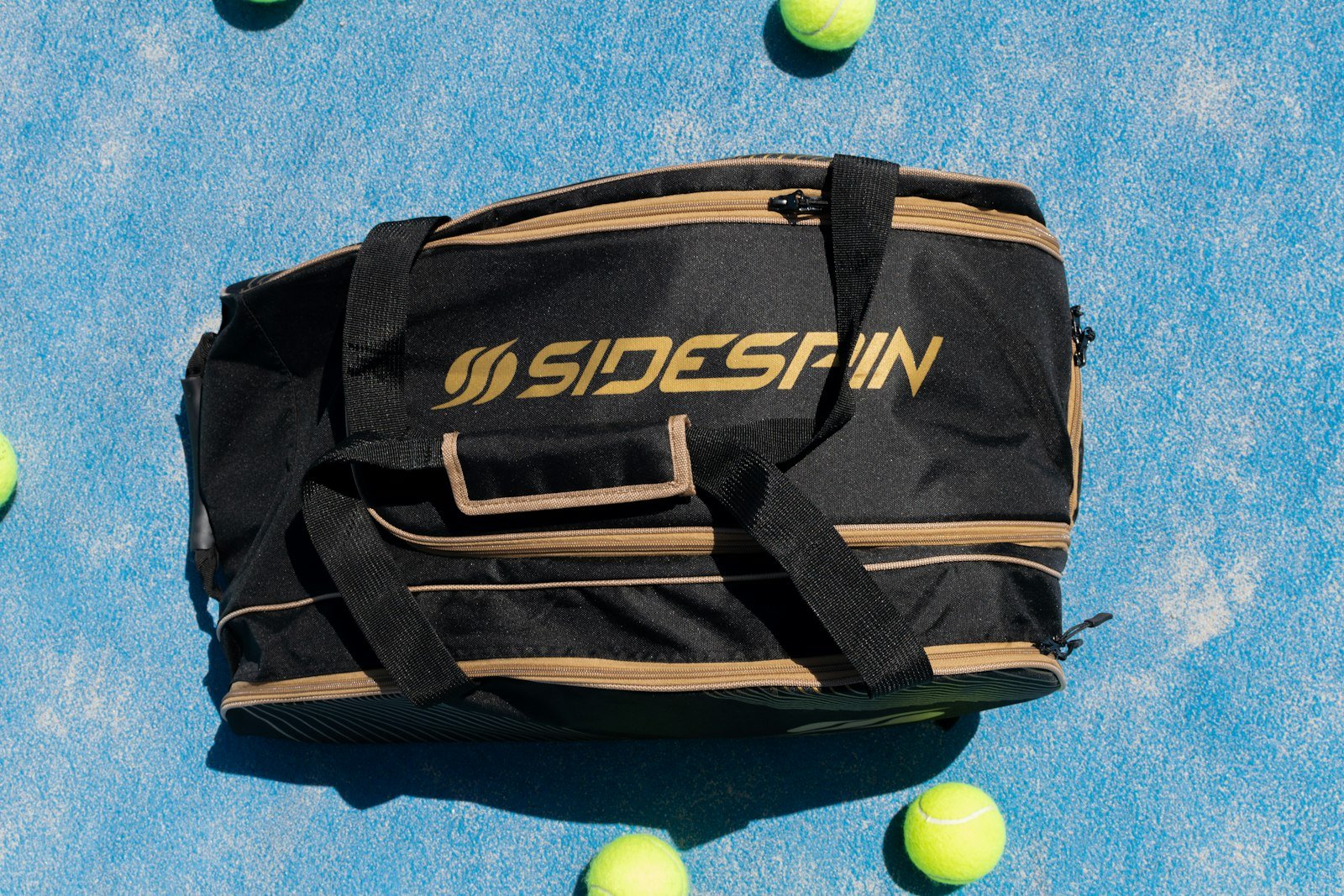
You play 2 times a week, your racket sits in a regular backpack, and your gear gets damp in the car trunk? You’re like 80% of beginners — and you’re needlessly accelerating your equipment wear.
A good padel bag isn’t a whim: it protects your racket from impacts, isolates wet clothes, and saves you 5 minutes per session. Here’s our complete guide to choosing the right model based on your profile and budget in 2026.
- The 3 main types of padel bags
- The 5 criteria that really matter
- Budget by player profile
- The 4 mistakes to avoid when buying
- FAQ — Padel bag
The 3 main types of padel bags
Before choosing a model, understand the 3 formats available.
1. The simple cover (€10-25)
The equivalent of a fabric pouch: slide in 1 racket and 1-2 balls. Minimalist format, easy transport, but zero impact protection and no extra compartments. To avoid if you play 2+ times per week — your racket will age twice as fast.
2. The “casual” padel bag (€25-50)
Backpack or shoulder bag format with 2-3 compartments: racket, shoes, clothes. The sweet spot for 90% of amateur players. You comfortably carry all your gear, your racket is protected by padding, and the whole stays compact. Our recommended format for regular players.
3. The pro padbag (€50-120)
Tournament format: 4-6 rackets capacity, thermal compartment, shoe ventilation, independent straps. What competitors use. Oversized if you play casually, essential if you play tournaments or carry multiple rackets per session.
The 5 criteria that really matter
Beyond type, here are the 5 criteria to verify before any purchase.
1. Racket protection
Rigid compartment or interior foam of at least 5mm thickness. Without it, each bag drop transmits shock to the racket. This is criterion number 1: a €30 bag with good protection beats a €60 bag without padding.
2. Ventilated shoe compartment
A waterproof partition that separates shoes from the rest. Prevents sweat from soaking clean clothes and limits odors. For intensive players, non-negotiable.
3. Carrying format
Backpack vs shoulder bag vs trolley. For most players: ergonomic backpack (clear shoulders, ventilated back). For long trips or travel: trolley with wheels. For car-to-court daily: shoulder bag is enough.
4. Zipper durability
Low-end zippers fail in 6 months on heavily used bags. Prefer YKK or equivalent zippers, more solid. To check: open and close quickly — if it catches new, it’ll catch twice as much in 6 months.
5. Appropriate size
Too big a bag is annoying to carry, too small forces you to leave gear behind. For a casual player: 30-40 liters useful volume is the right setting.
Budget by player profile
| Profile | Budget | Recommended format |
|---|---|---|
| Beginner 1×/week | €15-30 | Padded cover or small backpack |
| Regular 2-3×/week | €30-55 | Casual backpack with shoe compartment |
| Intensive 4×+/week | €55-90 | Padbag with 3 rackets, thermal compartment |
| Competitor | €90-150 | Pro padbag 6 rackets, multiple straps |
The 4 mistakes to avoid when buying
- Buying a tennis bag to play padel. Compartments are designed for longer rackets — the padel racket moves and takes impacts inside.
- Prioritizing design over padding. A visual but unpadded bag breaks the racket it should protect. Material matters more than aesthetics.
- Undersizing to save money. A too-tight bag forces leaving gear out — your shoes end in a plastic bag, your clothes in the washing machine twice as often.
- Going full “pro” when you play casually. The 6-racket padbag weighs 2kg empty. If you have only one racket, that’s needless weight to carry.
FAQ — Padel bag
Is a dedicated padel bag needed or does a regular sport bag work?
A sport bag works for the first 3 weeks. Once you play regularly, the dedicated bag becomes useful: adapted compartments, racket protection, shoe ventilation. Investment amortized in 3-6 months on saved equipment wear.
How long does a padel bag last?
A decent bag (€30+) well maintained lasts 3-5 years in regular play. Zippers are the first to fail, followed by shoulder strap padding.
How to clean a padel bag?
Vacuum the interior once a month (dust, sand, fluff). For stains: damp sponge + mild soap. Avoid washing machine — zippers and padding get damaged. Simple covers wash at 30°C in machine.
Is a backpack really better than a shoulder bag?
For trips over 15 minutes, yes: weight distributes across both shoulders. For short trips (car to court direct), the shoulder bag is faster to put on/off.
What accessories to carry in a padel bag?
Essentials: microfiber cloth for the racket, spare overgrip, 750ml water bottle, sponge towel, optional muscle balm. For intensive: spare t-shirt and socks. Pour approfondir, consultez les ressources de Head et de Bullpadel.
Going further
How to Care for Your Padel Bag
A padel bag that lasts is one that’s maintained properly. After each session, remove damp clothes and towels immediately — leaving them inside accelerates mold and damages the thermal lining. Air the bag out with the zips open between sessions. Every month, wipe down the interior with a dry or slightly damp cloth to remove dust and ball residue. For the exterior, avoid machine washing — it ruins the structure and waterproof coating. A gentle hand wash with mild soap works well for most fabrics.
If your bag has a thermal compartment for rackets, keep it away from direct sunlight and car boots in summer — heat above 40°C degrades the EVA foam inside your racket. Store your bag upright at home to prevent deformation of the frame. With basic care, a mid-range padel bag easily lasts 3 to 5 years, making it one of the best long-term investments in your padel kit alongside the racket itself !
Pour aller plus loin
Top Padel Bag Picks for Every Budget in 2026
Here are the standout options across three budget levels, based on quality, protection and value.
Under €25 — Head Core Padel Combi Bag: A solid entry-level paletero. Holds 2 rackets with basic protection, small accessory pocket, padded shoulder strap. Fine for beginners playing once a week. Doesn’t have thermal protection or a wet clothes compartment.
€30–55 — Babolat RH Padel Lite Bag: The sweet spot for regular players. Isothermal racket compartment (protects against heat up to 45°C), separate shoe compartment, 2 racket slots. Well-built, comfortable to carry, available in multiple colourways. This is the benchmark bag for intermediate players.
€60–90 — Bullpadel Performance Backpack: For players who train 3+ times per week. Reinforced back panel, large main compartment that fits rackets + clothes + shoes, waterproof base. The padded shoulder straps make it genuinely comfortable for longer commutes. If you cycle or take public transport to your club, this is worth the upgrade.
Bag Features Worth Paying Extra For
Isothermal racket compartment is the single feature most worth paying for. Temperatures inside a car in summer can reach 60–70°C — this destroys EVA foam cores in weeks. A basic isothermal layer reduces internal temperature by 15–20°C, significantly extending racket life. Second priority: a separate wet clothes compartment. Mixing sweaty kit with rackets accelerates grip degradation. Third: a dedicated shoe slot at the base, which keeps chalk and dirt away from rackets and clothes. Everything else (USB charging ports, bottle holders, logo branding) is cosmetic.